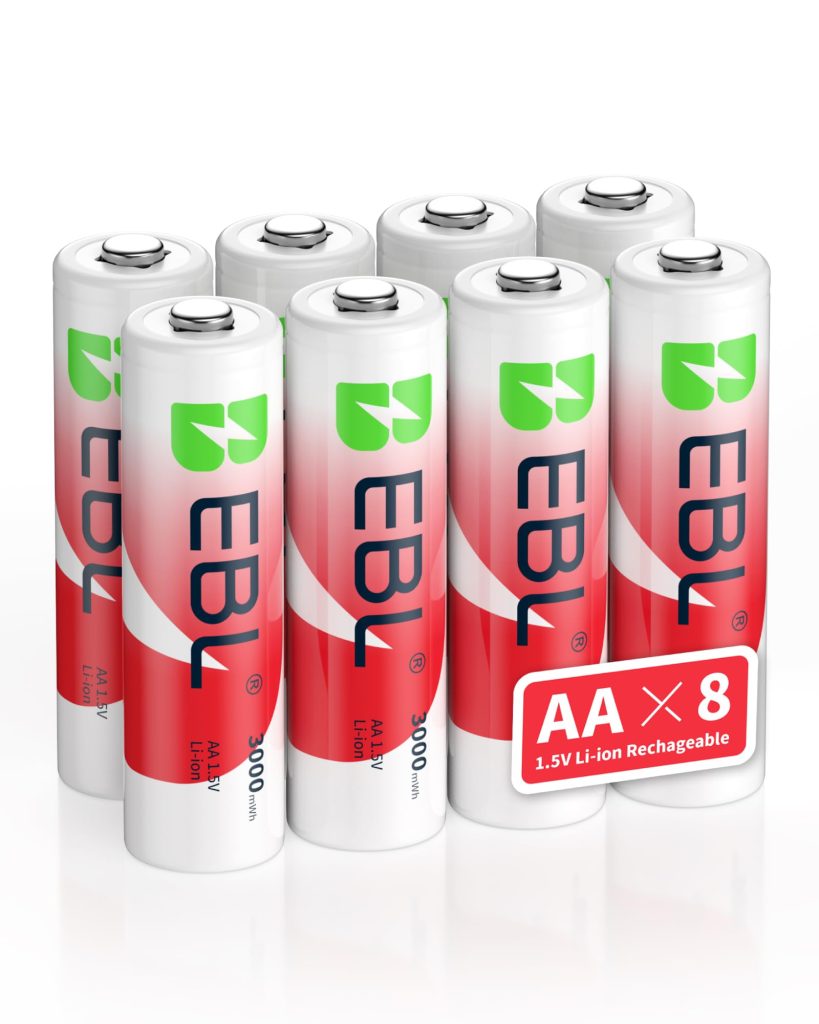
Rechargeable batteries for security cameras are a practical alternative to disposables, but they come with their own set of considerations. The EBL Rechargeable AA Lithium Batteries 8Pack, rated at 1.5V and 3000mWh, is aimed specifically at devices like Blink cameras that demand a steady 1.5V output. Unlike traditional NiMH rechargeables that deliver 1.2V, these lithium cells are designed to match the voltage of standard alkaline batteries, which can be important for devices that are sensitive to voltage drops.
In real-world use, Blink cameras are often mounted outdoors, where they face temperature swings and need to operate reliably for months on a set of batteries. EBL claims these batteries are a direct replacement for disposable AAs, and they do hold a constant 1.5V throughout their discharge cycle. That means the camera’s performance shouldn’t degrade as the battery drains, unlike with NiMH cells that gradually lose voltage. The 3000mWh capacity translates to roughly 2000mAh at 1.5V, which is on the higher end for rechargeable AAs. In practice, users might see a few weeks to a couple of months of use per charge, depending on motion events and clip length. That’s less than what you’d get from a fresh set of lithium disposables, but over time, the rechargeable route can be more economical and generate less waste.
One of the key features is the lithium-ion chemistry, which allows for a higher voltage than NiMH. These batteries also have a low self-discharge rate, so they retain their charge when not in use—a plus for backup sets. The included charger? Actually, the 8-pack doesn’t come with a charger, so you’ll need to supply your own compatible lithium battery charger. That’s a notable trade-off: the initial cost might be higher if you don’t already own one. Also, these are not standard NiMH batteries, so you can’t charge them in a typical NiMH charger. You’ll need a charger specifically designed for 1.5V lithium rechargeables.
Compared to alternative solutions like disposable lithium batteries (e.g., Energizer Ultimate Lithium), the EBLs have a lower upfront cost per use but require an initial investment in a charger. Disposables have a longer shelf life and can last longer in extreme cold, but they’re one-and-done. NiMH rechargeables, on the other hand, are cheaper but may not provide the consistent 1.5V that Blink cameras prefer. In cold weather, lithium rechargeables generally outperform NiMH, but they may still struggle in sub-zero temperatures compared to disposables.
Who is this for? It’s best suited for Blink camera owners who want to reduce ongoing battery costs and are willing to manage recharging. It’s also a good fit for those who already own a compatible charger. However, if you need maximum runtime in harsh winter conditions or prefer the convenience of disposables, these might not be the best choice. Also, if you’re not tech-savvy or don’t want to deal with charging, stick with disposables.
In summary, the EBL Rechargeable AA Lithium Batteries offer a viable rechargeable option for Blink cameras, with the advantage of steady 1.5V output and decent capacity. They’re not without drawbacks—no charger included, and they may not last as long as disposables per charge—but for regular users, they can be a cost-effective and environmentally friendlier alternative.