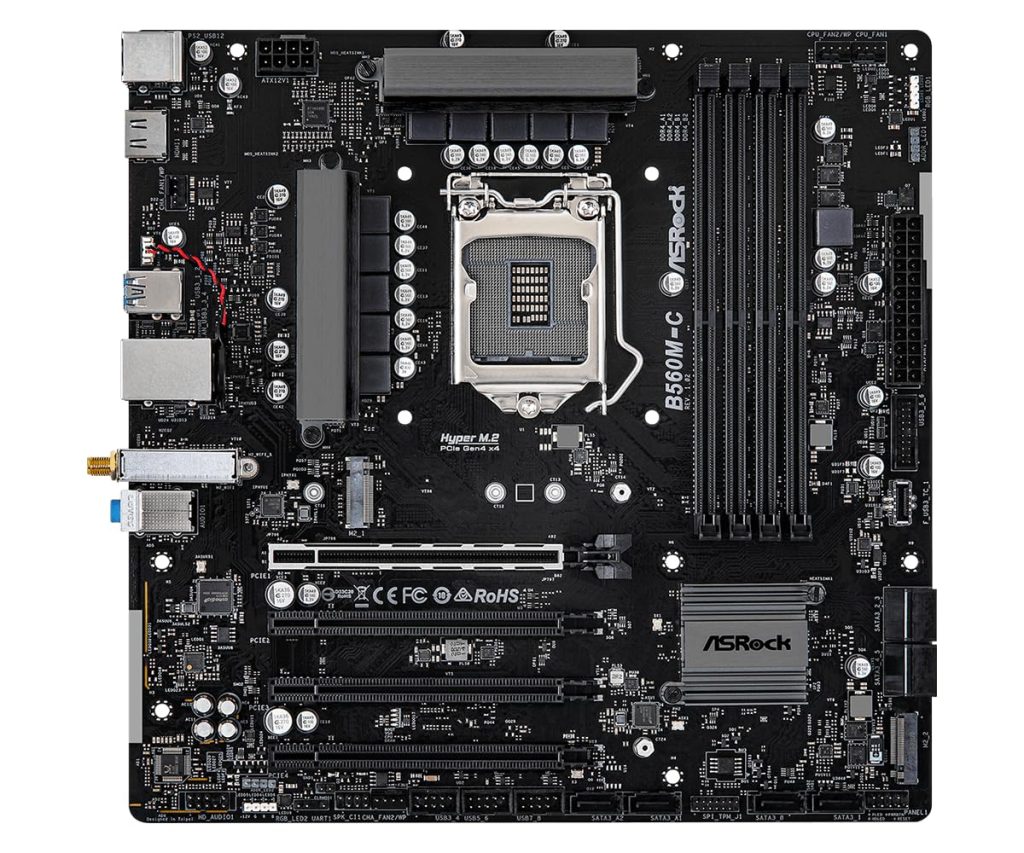
The ASRock B560M-C is a micro-ATX motherboard built around Intel’s B560 chipset, compatible with 10th and 11th Gen Core processors on the LGA1200 socket. It targets budget-conscious builders who need a compact board with integrated wireless networking and a generous number of storage connections, but without the overclocking features of Z-series boards.
In practice, this board is likely to end up in office PCs, home theater systems, or modest gaming rigs where space is tight and a wired network connection isn’t always available. The included WiFi and Bluetooth 5.1 add convenience for those who can’t run an Ethernet cable, while the eight SATA ports appeal to anyone with a collection of older hard drives or SSDs. The dual M.2 slots also provide room for modern NVMe storage, though only one of them supports PCIe 4.0 speeds with an 11th Gen CPU.
Key features include support for DDR4 memory up to 4800MHz when overclocked, a single PCIe 4.0 x16 slot for graphics cards, and an Intel Gigabit LAN port. The board has a modest VRM design with heatsinks, adequate for stock operation but not intended for sustained heavy overclocking. The rear I/O offers USB 3.2 Gen 1 and Gen 2 ports, HDMI, DisplayPort, and legacy PS/2 and VGA connections, which may be useful for older peripherals or displays.
One limitation is the memory overclocking support: while the board can handle high-speed DDR4 kits, achieving speeds above 3200MHz often requires manual tuning and may not be stable with all CPU and memory combinations. Additionally, the B560 chipset does not allow CPU overclocking, so unlocked K-series processors will run at stock speeds. The lack of a USB Type-C header on the board might also be a drawback for cases with front-panel USB-C ports.
Compared to a Z590 motherboard, the B560M-C sacrifices CPU overclocking and some PCIe lanes but costs significantly less. For most users who don’t overclock, the difference in everyday performance is negligible. Alternatively, a similar B560 board from another brand might offer a different mix of features, such as more USB ports or a better audio codec, so it’s worth comparing before buying.
This board is suitable for budget builders, office users, and those assembling a media center PC who need WiFi and lots of storage options. It is not suitable for enthusiasts planning to overclock a high-end CPU or for those who need the latest connectivity like USB 3.2 Gen 2×2 or Thunderbolt. If you fall into the latter category, a Z590 or B560 board with more premium features would be a better fit.