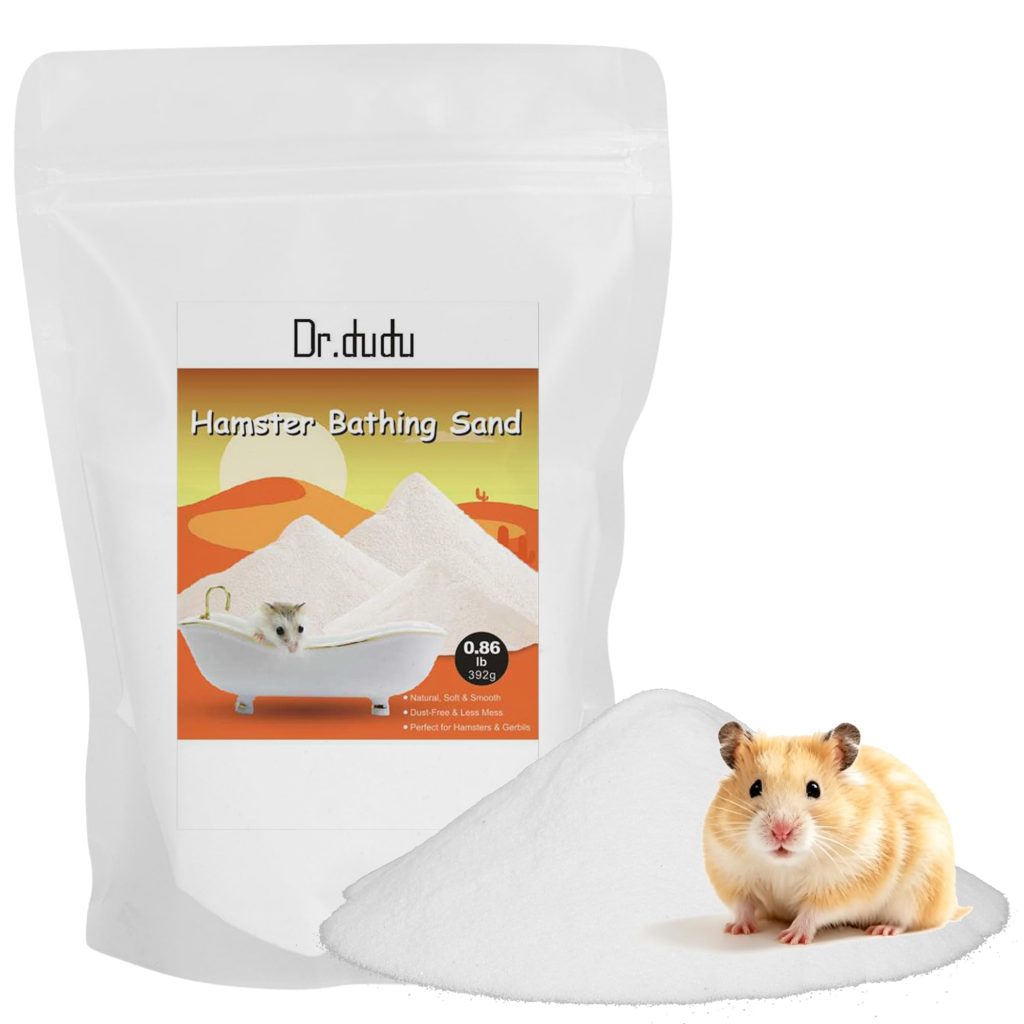
Sand baths have become a fairly standard part of hamster care, and the DR.DUDU 14oz bag of white sand is one of the more commonly encountered options in that category. It is sold as a cage accessory rather than a standalone product, which is worth keeping in mind: this is a consumable, not a piece of equipment. The bag is small, and the intended use is filling a shallow dish or tray so a hamster can roll, dig, and groom itself. How well it performs depends less on the sand itself and more on how it is presented and maintained.
In practice, owners pour a thin layer—roughly an inch or so—into a ceramic dish, a small plastic tray, or a corner of the enclosure. Syrian hamsters tend to use it vigorously, while dwarf hamsters often treat it more as a digging spot than a rolling one. The white color makes it easy to spot droppings and debris, which is a genuine convenience during daily spot-cleaning. That same lightness, however, means tracked sand shows up clearly on dark bedding and cage surfaces.
The functional details are straightforward. The product is described as 14 ounces of sand, which is enough for a couple of initial fills of a small bath depending on tray size. It is white and fine-grained, intended to be soft enough for a hamster to roll in without irritation. It is not a clumping clay litter, and it is not a cleaning chemical—it is a physical substrate for grooming and enrichment. Because the bag is modest, frequent users will likely need to reorder regularly, and a single bag will not last long in a multi-hamster household.
One of the more important considerations with any sand bath product is dust. Fine sand can become airborne when poured or disturbed, and hamsters have sensitive respiratory systems. The DR.DUDU sand is fine-grained, and while fine texture is generally desirable for a bath, it also means owners should pour it slowly and consider rinsing or sifting it before first use if dust is a concern. This is not a unique flaw—many sand bath products share it—but it is a practical trade-off that buyers should weigh rather than overlook.
Another limitation is the packaging size relative to typical use. A 14-ounce bag sounds substantial, but sand baths need regular replacement, especially once they are soiled. For a single hamster, a bag might last a few weeks with weekly partial changes; for multiple animals or larger trays, it will go quickly. That makes the per-use cost worth checking against larger bulk bags of hamster-safe sand, which are often sold in multi-pound quantities.
This is where a comparison helps. The DR.DUDU product sits in the same category as generic chinchilla sand, reptile sand, and other fine bathing substrates. Bulk bags from those categories typically offer more volume for the money, but they vary in dust level and grain consistency, so buyers need to verify they are unscented and free of additives. The DR.DUDU bag’s advantage is its small size and clear labeling as a hamster accessory, which suits first-time owners who want a simple starting quantity rather than committing to a large sack. The trade-off is cost efficiency: smaller bags generally cost more per ounce.
Realistic expectations matter here. A sand bath is an enrichment and hygiene aid, not a substitute for spot-cleaning the cage or for providing appropriate bedding. Hamsters may ignore a new bath for days before using it, and some never take to rolling at all. The sand does not eliminate odor on its own, and it should be changed when it becomes visibly soiled or damp. Owners should also ensure the bath is not left in the cage indefinitely without refreshing, since soiled sand defeats the purpose.
Who is this suitable for? Primarily single-hamster owners, especially those new to sand baths, who want a small, clearly labeled quantity to try before committing to bulk purchases. It also suits owners of dwarf hamsters who use smaller trays and go through less sand. Who is it less suitable for? Households with multiple hamsters or large enclosures, where the 14-ounce bag will be depleted quickly and bulk options make more economic sense. It is also a weaker fit for owners who are highly sensitive to dust or who prefer to sift and rinse substrates before use, since the fine grain requires a bit of care.
Overall, the DR.DUDU sand is a functional, no-frills entry point into sand bathing. It does what it claims without standing out, and its main drawbacks—modest quantity and fine dust—are common to the category rather than unique to this bag. Buyers comparing it against bulk sand should think about usage frequency and tray size before deciding whether the convenience of a small bag outweighs the higher cost per ounce.