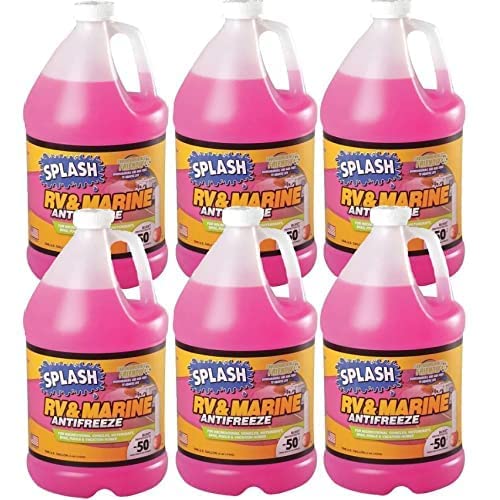
Winterizing an RV or boat is one of those jobs where the product matters less than the process, but the product still has to behave predictably. The RV & Marine Splash 619526 is a six-gallon jug of pink propylene glycol antifreeze intended for potable water systems in recreational vehicles, boats, and occasionally cabins or vacation properties. It is a straightforward commodity item, and it should be evaluated that way: not as a premium formulation with special additives, but as a bulk quantity of the standard pink fluid most owners already know.
The pink color is the practical cue here. In the RV and marine world, pink typically signals propylene glycol rated for potable water lines, as opposed to the often-toxic ethylene glycol used in engine cooling systems. Splash follows that convention. The fluid is designed to be pumped through freshwater plumbing, drained, and then flushed out in spring. It is not a coolant and should not go in a radiator or engine block, a distinction that matters because the packaging and color can invite confusion for first-time owners.
In real use, the six-gallon format fits a common workflow. A typical Class C motorhome or mid-size travel trailer with a freshwater tank, water heater bypass, and a handful of faucets, toilet, and shower generally consumes somewhere between two and four gallons when winterizing with a bypass in place. Boats with a freshwater system, head, and washdown may use similar amounts. Six gallons leaves some margin for a second pass, a stubborn low point, or sharing with a neighbor at the storage lot. It is also a convenient size for owners who winterize twice a season or who store the rig in a cold climate and want a spare jug on hand.
- Format: Six gallons, typically sold as a multi-pack of one-gallon containers or a single bulk jug depending on the retailer.
- Chemistry: Propylene glycol-based, pink, marketed for potable water systems.
- Intended use: RV and marine freshwater plumbing, tanks, lines, traps, and toilets.
- Not intended for: Engine cooling systems, closed-loop heating, or any application requiring ethylene glycol.
Performance expectations should stay modest. Propylene glycol antifreeze does its job when the system is properly prepared: water heater bypassed, tank drained, lines blown out with air where possible, and fluid pulled through until it runs pink at every fixture. Splash does not change that math. Where a product like this can fall short is in concentration and freeze protection claims. Many pink RV antifreezes are sold with burst-protection ratings that vary by brand, and some dilute formulations protect against bursting at lower temperatures than they protect against actual freezing. Owners in hard-freeze regions should read the label’s temperature ratings rather than assuming all pink fluids are equal. Splash’s labeling is functional rather than elaborate, and buyers who need documented protection to a specific temperature should verify the numbers on the container before relying on it.
A second trade-off is residue. Propylene glycol can leave a slightly slick film and, if left in lines over a long season, may contribute to taste or odor that requires thorough flushing in spring. That is true of the category, not unique to Splash, but it is worth planning for. Some owners prefer to blow out lines with compressed air and use minimal antifreeze, reserving fluid for traps and the toilet. Others use a non-toxic, lower-residue formulation sold at a higher price per gallon. Splash sits in the value-oriented middle: it does the job without premium pricing, but it does not offer the reduced-odor or extended-protection claims some competitors market.
Compared with engine antifreeze or a dedicated plumbing winterizing concentrate, the Splash product is clearly in the consumer RV/marine segment. Engine coolants are the wrong chemistry and dangerous in potable lines. Concentrates require mixing and introduce a measurement step that some owners would rather avoid. Ready-to-use pink fluid like this is the low-friction choice for people who winterize once a year and want to get it done.
Who is it for? Primarily RV and boat owners in seasonal climates who winterize their own freshwater systems and want a reasonably priced, correctly labeled pink fluid in a quantity that covers a typical rig. It also suits owners of small cabins, campers, or guest houses with simple plumbing. Who is it not for? Anyone expecting a one-product solution for engine winterizing, owners who need a specific documented burst-protection rating, and those who prefer a low-residue or odor-free formulation may want to look elsewhere. It is also overkill for a tiny pop-up camper with a single sink, where a gallon or two would do.
The honest summary is that this is a utilitarian consumable that succeeds when used correctly and disappoints mainly when buyers expect it to compensate for skipped steps. Six gallons is a sensible amount for most trailer and boat owners, the pink propylene glycol chemistry is the right choice for potable lines, and the price per gallon tends to be reasonable. The caveats are the usual ones for the category: verify freeze ratings, flush thoroughly in spring, and never treat it as a substitute for engine coolant.